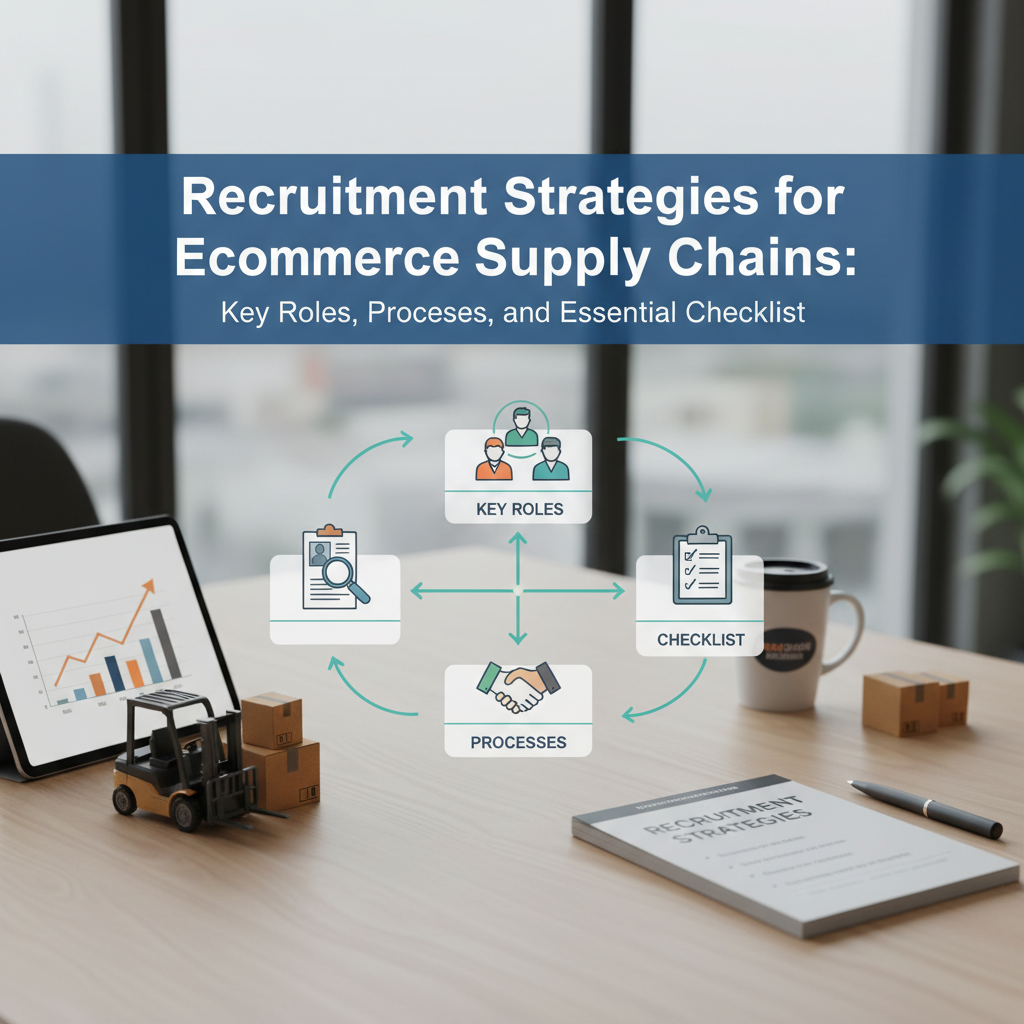
Recruitment for supply chain positions involves selecting individuals who oversee the planning, transportation, storage, and distribution of products. In the realm of ecommerce, these hiring choices can significantly influence whether orders reach customers promptly or face hidden disruptions.
Many ecommerce entrepreneurs experience the stress of supply chain challenges before they can pinpoint the underlying issues. Problems such as delayed shipments, sudden stockouts of popular items, and an influx of returns can escalate quickly. As the pressure mounts, the supply chain often emerges as the critical bottleneck. The hiring process in this area can be daunting due to the specialized skills required, the intense competition, and the interconnected nature of various roles.
This article delves into the essentials of supply chain recruitment, illustrating its relationship with supply chain management, highlighting the most vital roles, and providing a straightforward checklist to aid in the evaluation and selection of candidates for these positions.
Understanding Supply Chain Recruitment
Defining Supply Chain Recruitment
Supply chain recruitment refers to the process of attracting and hiring skilled professionals involved in planning, purchasing, logistics, warehousing, and order fulfillment, ensuring seamless product flow from suppliers to end customers.
The Urgent Need for Supply Chain Recruitment in Ecommerce
Ecommerce supply chains are more susceptible to disruptions compared to traditional supply chains, primarily because growth tends to be unpredictable.
- Rapid expansion of product lines
- Diverse selling channels, including marketplaces and direct-to-consumer
- Reliance on third-party logistics (3PL) partners
- Increasing volume of returns
- Fluctuations during peak shopping seasons
Each of these factors creates pressure long before hiring plans can adjust.
When to Prioritize Supply Chain Hiring
Certain warning signs may not be obvious until they lead to costly consequences.
- Declining accuracy in inventory tracking
- Frequent occurrences of stock shortages or excess inventory
- Regular delays in order fulfillment
- Increased refunds due to shipping mistakes
- Excessive manual data management through spreadsheets
If you identify two or more of these issues, it is likely time to bolster your recruitment efforts.
Connecting Supply Chain Management Processes with Hiring Needs
Stages of the Supply Chain in Ecommerce
Typically, supply chain management operates in a cyclical manner. Planning determines what to procure and when. Sourcing ensures supplier management and appropriate lead times. Storage focuses on warehouse efficiency and inventory accuracy. Delivery manages carriers, 3PLs, and customer commitments. Returns facilitate the reintegration of products into inventory or the writing off of losses. Enablement supports all stages through systems, data management, and automation.
Mapping Stages to Hiring Needs
| Supply Chain Stage | Ecommerce Responsibilities | Roles to Consider |
| Planning | Forecasting, reorder levels | Demand Planner, Inventory Analyst |
| Sourcing | Supplier oversight, lead times | Buyer, Procurement Specialist |
| Storage | Warehouse operations, WMS accuracy | Warehouse Manager, WMS Supervisor |
| Delivery | Shipping, 3PL management | Logistics Coordinator, Shipping Manager |
| Returns | Reverse logistics, restocking | Returns Coordinator, Customer Service Operations |
| Enablement | Reporting, automation | Supply Chain Analyst, ERP or WMS Expert |
Consequences of Misaligned Hiring
- A planner lacking forecasting expertise may inadvertently create stock shortages.
- A warehouse lead without WMS experience could contribute to inaccuracies in inventory.
- A logistics hire without carrier knowledge might lead to inflated shipping expenses.
The process is effective only when each role is appropriately matched to its respective stage.
Step-by-Step Recruitment Process for Ecommerce Supply Chains
Step 1: Define Roles by Outcomes, Not Just Tasks
- Begin with what successful performance looks like, rather than relying on a generic job description.
- Establish key performance indicators (KPIs) such as on-time delivery, inventory precision, order fill rates, picking efficiency, and freight expenses.
- Set clear expectations for the first 60 to 90 days of the role.
This approach ensures that interviews remain focused on real-world performance.
Step 2: Create a Role Scorecard
- A well-structured scorecard minimizes emotional decision-making in hiring.
- Differentiate between essential and desirable skills.
- Identify necessary tools such as ERP, WMS, TMS, and analytics platforms.
- Consider ecommerce experience as opposed to backgrounds solely in manufacturing.
If a skill is not included on the scorecard, it should not dictate the hiring choice.
Step 3: Select the Right Recruitment Model
In-house recruitment is effective when hiring needs are stable. Agencies can assist when roles require specialized skills or urgent filling. A hybrid model combines internal screening with external talent sourcing. Temporary hires are viable for seasonal fluctuations.
Step 4: Evaluate Candidates Using Realistic Scenarios
While impressive resumes are common, true judgment surfaces through practical scenarios.
- How would you react if a supplier’s lead time doubled suddenly?
- What criteria do you use for setting safety stock levels for seasonal products?
- What strategies would you implement to cut shipping costs without compromising delivery timelines?
- Which metrics indicate that your inventory data might be inaccurate?
- How do you manage a 3PL failing to meet service level agreements?
- What would be your immediate action in response to a spike in returns?
Step 5: Conduct Interviews, Validate Skills, and Check References
Structured interviews focus on skill assessment rather than personal chemistry. Use rubrics and practical skill tests relevant to the tools or data used in the role.
Step 6: Onboard Effectively to Minimize Turnover
- Comprehensive onboarding safeguards the investment in the new hire.
- Outline a 30-60-90 day plan.
- Provide access to necessary systems and workflow diagrams.
- Facilitate introductions to customer service, marketing, warehouse, and finance teams.
Key Roles Ecommerce Companies Typically Hire and Their Impact
Essential Roles in Ecommerce Supply Chains
- Inventory Analyst addresses issues related to stock shortages and excess inventory.
- Demand Planner enhances forecasting accuracy and optimizes cash flow.
- Logistics Coordinator mitigates late deliveries.
- Warehouse Manager boosts operational speed and accuracy.
- Returns Coordinator helps in managing backlog and expediting restocking.
Roles for Brands in Growth Phases
- Supply Chain Manager
- Procurement Manager
- 3PL Operations Manager
- Systems or WMS Specialist
Specialist Roles for Complex Supply Chains
- Network Optimization Specialist
- Supply Chain Data Analyst
- Global Trade Compliance Officer
| Role | Optimal Hiring Timing | KPI Influence |
| Demand Planner | During seasonal fluctuations | Reduction in stockouts |
| Logistics Lead | When carrier expenses are high | Decrease in shipping costs |
| Returns Operations Manager | When return rates are elevated | Reduction in cycle time |
Skills Critical for Successful Ecommerce Supply Chain Hiring
Key Hard Skills
- Forecasting and Sales & Operations Planning
- Inventory Management
- Carrier Management
- Supplier Negotiation
- Warehouse Workflow Design
Systems and Tools That Differentiate Average from Exceptional Hires
| Tool | Importance | Relevant Roles |
| ERP | Serves as the single source of truth | Planners, Managers |
| WMS | Enhances inventory accuracy | Warehouse Supervisors |
| TMS | Optimizes shipping processes | Logistics Staff |
| Excel or SQL | Speeds up analysis | Analysts |
| Business Intelligence Tools | Improves data visibility | Leadership Roles |
Essential Soft Skills for Long-Term Success
- Collaborative mindset across teams
- Ability to remain composed under pressure
- Sense of ownership and responsibility
- Effective communication with 3PL partners and suppliers
Evaluating Supply Chain Recruitment Agencies: A Guide
What Makes a Recruiter Suitable for Ecommerce
Many brands make the mistake of hiring generalists. Look for the following:
- Experience with ecommerce fulfillment
- Knowledge of various roles within organizational planning, logistics, and warehousing
- Access to a pool of passive candidates
- Thorough screening processes, not just resume submissions
- Assurance of replacement in case of hiring mistakes
- Clear benchmarks for time-to-fill
- Transparent reporting on candidate pipelines
Specialized supply chain recruitment agencies often outperform general staffing firms in these areas.
Agency Evaluation Scorecard
| Criteria | Significance | Indicators of Excellence |
| Ecommerce Expertise | Reduces the likelihood of poor hires | Demonstrated successful placements in ecommerce |
| Role Specificity | Helps avoid generalist profiles | Expertise in planning, logistics, and warehousing roles |
| Screening Quality | Enhances candidate quality | Utilization of case studies and skill validations |
| Recruitment Speed | Minimizes operational disruptions | Time-to-fill metrics shared openly |
| Guarantee Policy | Mitigates hiring risks | Replacement guarantee offered |
| Communication Efficiency | Improves execution and outcomes | Regular pipeline reports provided |
Key Questions to Consider Before Selecting an Agency
- What ecommerce roles have you successfully filled lately?
- How do you evaluate candidates for operational competencies?
- Which tools do you use for candidate assessments?
- What is the average duration of your recruitment process?
- Do you provide guarantees for replacements?
- Who will oversee the recruitment process on a daily basis?
- How often will you provide updates on pipeline progress?
- Are you equipped to assist with hiring during peak seasons?
In-House, Agency, or Hybrid Recruitment: What Suits Ecommerce Brands Best?
When In-House Recruitment is Effective
Consistent hiring needs, robust internal HR teams, and well-defined roles make in-house recruitment a viable option.
When to Opt for Agencies
Agencies excel when urgent hiring is necessary, specialized skills are required, or when leadership positions arise where mistakes can be costly.
Optimal Hybrid Model
An effective hybrid strategy involves internal ownership of recruitment strategy while leveraging external resources for challenging positions.
Supply chain recruitment goes beyond merely filling positions; it serves as a strategy for managing risks associated with ecommerce growth. The right hires ensure a smooth flow of orders, customer satisfaction, and healthy profit margins, even amidst rapid changes.
Disclaimer
The information provided in this article is general and descriptive in nature. The scope and outcomes of recruitment practices can vary based on specific contexts and individual decisions. No guarantees regarding results or performance are implied, and experiences may differ among different ecommerce brands.