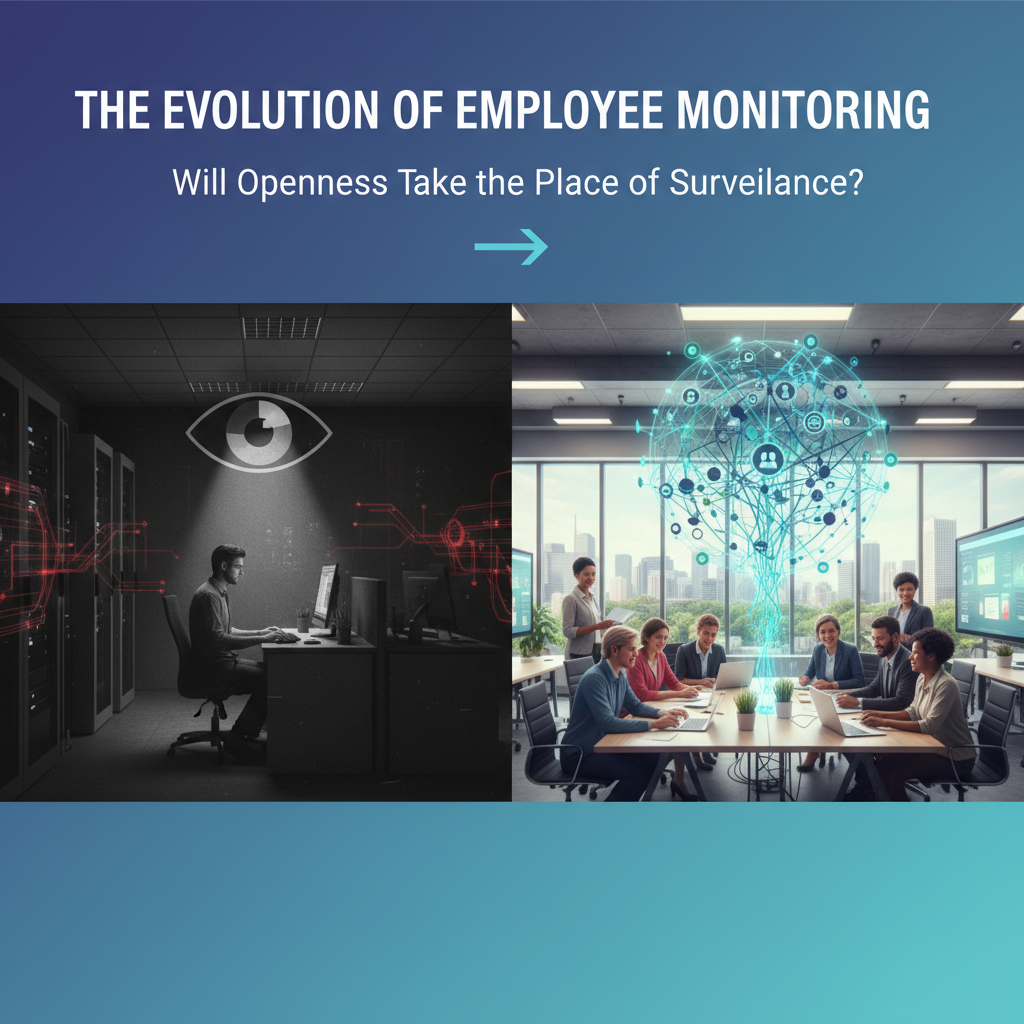
For many years, employee monitoring has been synonymous with oversight and control. However, as workplace dynamics shift and employee desires evolve, organizations are beginning to reconsider their approaches to evaluating productivity. The trajectory of employee monitoring tools is increasingly leaning towards openness and transparency, rather than mere surveillance.
Shifting from Oversight to Partnership
Historically, monitoring focused on scrutinizing individual behaviors to ensure compliance. Techniques such as taking screenshots, tracking keystrokes, and enforcing strict time schedules were primarily aimed at deterring misuse instead of fostering a supportive work environment.
In today’s workplaces, a more collaborative approach is essential. Employees are looking for a culture built on trust, autonomy, and mutual respect, especially in remote or hybrid setups. Consequently, the focus of monitoring is transitioning from stringent control to insightful collaboration.
Openness as a Strategic Advantage
Openness in monitoring practices involves clearly communicating what kind of data is being collected, its intended use, and who can access it. When employees are aware of how monitoring works, they are less likely to resist and more inclined to trust the organization.
Progressive companies are rebranding employee monitoring tools as shared resources that boost productivity instead of as instruments of management control. In some cases, organizations provide employees access to their performance data, promoting accountability and self-management.
Ethics and Privacy Considerations
As monitoring technologies advance, ethical considerations become increasingly crucial. Both regulatory frameworks and employee advocacy are steering organizations towards privacy-centric solutions.
The future landscape of employee monitoring will likely emphasize limited data collection, anonymized analytics, and insights geared towards constructive purposes. Tools that rely heavily on surveillance may encounter growing pushback—both on legal and cultural fronts.
Data as a Resource for Improvement
In the next phase of workplace monitoring, data will serve to uplift employees rather than penalize them. Understanding workload distribution, identifying burnout risks, and recognizing gaps in collaboration can empower organizations to create more supportive work environments.
Future monitoring practices are expected to focus on providing feedback rather than exerting control, spotlighting areas for enhancement rather than enforcing relentless oversight.
Can Openness Replace Surveillance?
While surveillance might not vanish entirely, it is unlikely to remain the default method. Openness, informed consent, and context-aware monitoring are fast becoming the new norms.
The future will favor employee monitoring systems that empower individuals, foster trust, and align productivity with well-being—demonstrating that visibility and respect can indeed coexist.
Employee Involvement and Co-Creation: The Next Frontier in Monitoring
One of the most significant changes in the arena of employee monitoring software is the shift from unilateral decision-making to engaging employees in the development of monitoring policies. Instead of top-down imposition, progressive organizations are beginning to collaborate with their teams to establish monitoring guidelines.
In transparent environments, employee consent is evolving beyond a mere checkbox. Staff members actively contribute to discussions regarding what metrics should be tracked, how the resulting data is interpreted, and where to set limits. This collaborative approach redefines monitoring from a controlling mechanism to a framework for shared productivity.
When employees feel a sense of ownership over monitoring initiatives, resistance diminishes significantly. Trust improves, data quality enhances, and insights from monitoring become more impactful. Moving forward, employee monitoring tools will likely incorporate customizable visibility settings, opt-in features, and feedback mechanisms that enable employees to shape the evolution of monitoring practices.
FAQ: Openness-Driven Employee Monitoring Tools
- What does openness mean in employee monitoring? Openness refers to clearly sharing what data is gathered, when it is collected, and for what purposes. Monitoring tools that prioritize transparency eliminate hidden tracking and provide employees with full insight into monitoring procedures.
- Does employee consent undermine monitoring effectiveness? No. In fact, when employees are aware of and agree with the monitoring objectives, their engagement often increases and they are less likely to find ways to resist or circumvent monitoring systems.
- How can organizations include employees in monitoring decisions? Companies can involve staff through policy discussions, pilot programs, feedback surveys, and shared dashboards. Collaborative development helps ensure monitoring systems align with actual workflows rather than disrupting them.
- Will openness lessen productivity accountability? Openness does not remove accountability—it reconceptualizes it. Employee monitoring tools still evaluate performance, but they do so in a manner that focuses on outcomes, progress, and fairness, rather than exerting control.
Conclusion
The future of employee monitoring is shaped not just by technology, but by elements of trust, ethics, and collaboration. As employee expectations evolve, approaches that rely on surveillance are becoming less viable.
Openness, consent, and purpose-driven insights are revolutionizing how organizations utilize employee monitoring tools, focusing on understanding work dynamics and enhancing them for the better.
Disclaimer
The information provided reflects general perspectives on employee monitoring practices. Individual experiences and interpretations may differ. No specific outcomes or guarantees are implied regarding the effectiveness or performance of monitoring tools.